
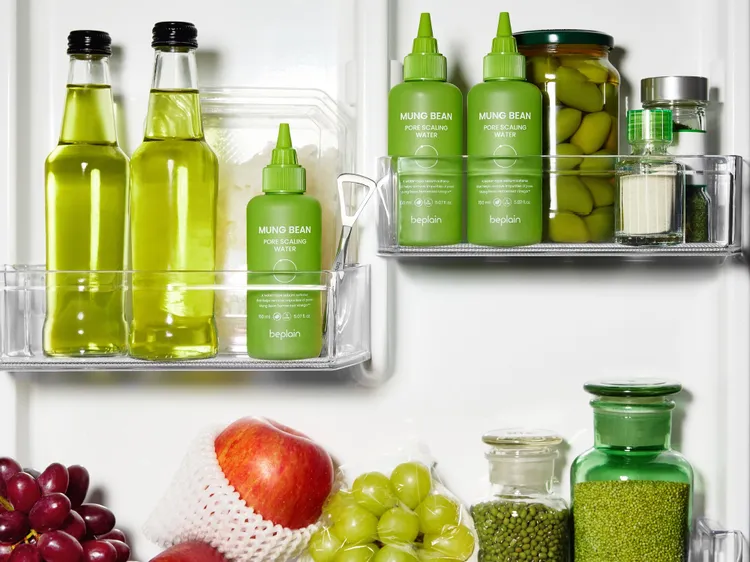
In today’s world, we’re inundated with ideas by the second—the latest fashion, beauty, travel, and tech trends come barreling at us full speed via our social media feeds. Trending K-beauty ingredients have been the latest to pique our collective interests, with innovations like PDRN, spicules, and biomimetic peptides quickly going from under-the-radar to buzzy faves. Recently, mung bean skincare has become one of said topics of interest, and you may be wondering if it’s as beneficial as TikTokers make it seem.
To find out, we chatted with a handful of skincare experts, including two dermatologists, a cosmetic chemist, and a K-beauty specialist. Ahead, get the full rundown on 2026’s hottest “new” K-beauty ingredient, from the benefits to how to incorporate it into your routine.
What Is Mung Bean?
Mung beans are small, oval-shaped legumes also known as green grams. Native to Southeast Asia, the tiny, olive green beans—generally smaller than peas—are packed with protein and amino acids. They’re a nutrient-dense addition for internal consumption and external application—hence why mung bean skincare is, was, and likely always will be a popular practice.
The History of Mung Bean Skincare
It may seem like mung bean is just now cropping up on Instagram and TikTok as the latest must-try K-beauty ingredient, but according to board-certified dermatologist Ava Shamban, MD, mung bean skincare has been around for ages. “Mung bean has actually been part of natural, botanically based Korean medicine and diet long before the birth of K-beauty as we know it today,” she says. “For hundreds of years in Korean culture, mung beans have been used in both culinary dishes and topical care.”
While mung beans are energizing and nutrient-dense from an internal perspective, Shamban says their detoxifying properties make them ideal for use in skincare. “Before commercialized soap as we know it, Koreans used mung paste as a body wash, clarifying facial cleanser, gentle exfoliating scrub, or mask,” she reveals.
According to board-certified dermatologist Kseniya Kobets, MD, ground mung bean was traditionally mixed with water to create the paste Shamban references. “It was used almost like an exfoliating cleansing powder to help remove oil and debris without the stripping effect of harsher soaps,” she explains.
The allure of mung bean skincare isn’t simply that it deeply cleanses the complexion: It reduces inflammation, too. “Mung beans also have a long history in Chinese traditional medicine and Ayurvedic medicine to alleviate inflammation, fever, digestive issues, and ‘heat-related’ conditions,” Kobets says. “In East Asian medicine, it’s considered a ‘cooling’ ingredient, which is likely why modern skincare brands now position it as calming and soothing.”
Because of the myriad benefits of mung beans, K-beauty expert, aesthetic doctor, and glass skin specialist Christine Hall says that mung bean skincare has long been lauded as a complexion savior for those with sensitive, inflamed, oily, and acne-prone skin, as well as those with heat-affected skin, which is common in places like Asia. “In traditional Korean medicine, mung bean has long been considered a detoxifying or cooling ingredient, both in terms of hot weather but also in cases of fever—so while it feels new to a lot of Western audiences, it’s a staple of Korean skincare,” she confirms.
Why It’s Trending
Korean beauty has had a collective chokehold on society for the last 10 years. The reason it’s endured is simple: Who doesn’t want clear, plump, hydrated, gorgeous, glowing skin? It’s the ultimate complexion goal, and K-beauty’s gentle yet effective ingredients can deliver.
“The current rise of mung bean reflects where the approach to skincare as a whole has moved,” Hall says. “We’ve shifted away from aggressive actives and toward barrier-conscious, plant-led formulations, and mung bean fits into this need. It’s gentle, multifunctional, well-tolerated, supported by a long tradition, and is considered safe.”
In short, mung bean might not be your typical active ingredient, but its varied effects make it seem just as beneficial, and therefore worthwhile. “It has a traditional-meets-modern appeal because it sounds natural and soothing while still feeling active,” Kobets says. “It fits perfectly into the current K-beauty trend of plant-based, gentle, antioxidant, and barrier-friendly skincare that still helps with congestion, oil, and uneven texture without overly stripping the skin.”
The Benefits
As mentioned, mung beans can work magic for irritated, inflamed, uneven skin, making them particularly beneficial for those with sensitive and reactive complexions, as well as those with textural concerns. “Mung bean is genuinely impressive in how much it can do without being harsh on the skin,” Hall says. “On the soothing side, mung bean is rich in flavonoids such as vitexin and isovitexin, alongside antioxidants and B vitamins. These help calm inflammation, reduce redness, and support the skin barrier. This is why it works so well for reactive, irritated, or post-procedure skin. In terms of clarifying properties, mung beans contain natural saponins and amino acids that gently lift impurities and help regulate sebum without stripping. The result is a clearer complexion that does not feel tight or compromised afterward.”
If you have rough, dry, or textured skin, mung bean skincare can help with that, too. “When used in its ground or powdered form, the finely milled particles provide mild physical exfoliation,” Hall says. “Mung bean also contains naturally occurring enzymes that help refine the surface of the skin without disrupting the barrier, which is something I look for when recommending exfoliating ingredients in the clinic.”
Who Should Use It?
Due to mung bean’s gentle, effective benefits, cosmetic chemist and BeautyStat founder Ron Robinson says the ingredient is suitable for all skin types, especially those that are more sensitive. “Mung bean is known to be calming and soothing as it reduces redness and cleanses the skin without stripping it, making it great for those with sensitive skin,” he explains.
Specifically, Hall says that, due to the ingredient’s anti-inflammatory and clarifying profiles, mung bean skincare can be especially transformative for those who have rosacea and/or are acne-prone. “It is an ingredient that comes with very little risk, which in medicine is important,” she admits.
There are only a couple of instances in which Hall would caution someone against trying mung bean skincare. “Mung bean is very well tolerated, but there are a few situations where I’d flag caution,” she explains. “Anyone with a known legume allergy, as with any new product, should patch test first. And those with a compromised skin barrier [due to factors like] mid-flare eczema or recent strong active use, should hold off on powder or scrub formats and stick to leave-on hydrating versions until the barrier has settled.”
How to Incorporate It Into Your Routine
Incorporating mung bean into your skincare routine is easy: Simply look for a K-beauty cleanser or mask formulated with the gentle powerhouse ingredient. While cleansers are typically designed to be used morning and night, Kobets says that mung bean-infused formulas are especially ideal for evening use. “A cleanser can be used like a regular face wash, especially at night, to help remove sunscreen, oil, and buildup,” she points out. If you take that mask route, she suggests easing the ingredient into your routine: “Powders and masks are probably best one to two times weekly rather than daily, because even gentle exfoliation can become irritating if overdone.”
Ultimately, though, the best way to incorporate mung beans into your skincare routine will depend on your specific complexion. “It really depends on the overall formulation and what other ingredients the mung bean is paired with,” Kobets reveals. “A clay-based mung bean mask may work better for oily or congested skin, while a hydrating cleanser with mung bean, glycerin, ceramides, or soothing ingredients may be more appropriate for sensitive or drier skin types. The final formula matters much more than the ingredient alone.”
Potential Drawbacks
Overall, mung bean is gentle, with few risks associated with topical application. That said, if you use it too frequently, there’s always the chance that you could over-exfoliate and disrupt your barrier.
“From a scientific perspective, it’s also worth noting that while traditional use is well established and the antioxidant profile is well-characterized, there are still relatively few clinical trials specifically on topical mung bean,” Hall adds. “Most of the evidence base comes from its compounds and from tradition, which is true of many skincare actives where the legal demand for clinical testing doesn’t exist.” That all goes to say, it’s best to use mung bean-infused skincare as directed and with reasonable expectations.
The Final Takeaway
While mung bean skincare may have a place in trending conversations, it’s an established K-beauty ingredient with a long history of calming, cleansing, and gently exfoliating the skin without unnecessary irritation. It’s worth a try if you’re looking for barrier-friendly refinement, especially if you have a more sensitive skin type or have experienced irritation from other ingredients. As Korean skincare continues to take over the markets worldwide, access to top-notch products featuring mung bean is likely to only increase, perhaps elevating this powerhouse from a niche favorite to mainstream staple status.